
Italy’s true charm often lies in its capacity for “slow travel”—an antidote to the rushed, checklist-based tourism that dominates its famous metropolises. This approach favors immersion and genuine connection, leading travelers to deeply rewarding, yet largely undiscovered, corners of the country.
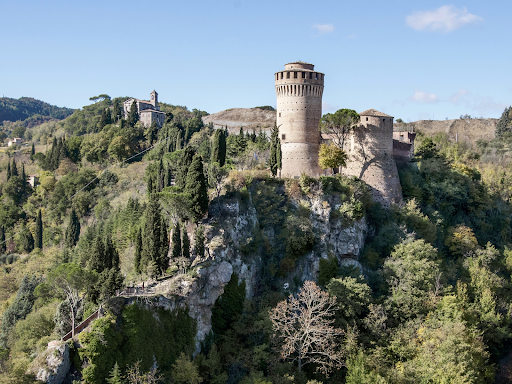
A prime example is the approach to the town of Brisighella in Emilia-Romagna. The scenery immediately enforces a change of pace, unfolding like a serene Renaissance painting. Jagged rocky formations, solitary watchtowers, and ancient trees give the landscape an almost magical, timeless quality.
Brisighella itself is perfectly structured for this unhurried pace. Its heart is a maze of twisting medieval lanes and stone houses, complemented by a secluded, elevated walkway. This platform offers panoramic views of the rooftops and valleys, encouraging travelers to simply sit and absorb the centuries of history layered into the town’s ancient stone.
Far to the south, the principle of slow exploration is manifest in Sicily’s Via dei Frati. This 54-mile trail across the rugged Madonie mountains is a journey of true solitude. Walkers regularly travel for days without encountering other tourists, with each stage concluding in a quiet, authentic village like Gangi, where interactions are based on simple, genuine human connection.
These remote havens—from the off-grid eco-hotels of the Apennines where phones fall silent, to the vast, solitary Roman ruins of Urbs Salvia—collectively define a profound alternative to mainstream tourism. This is an Italy of quiet contemplation, offering a deeper and intensely personal travel experience for those willing to slow down.