
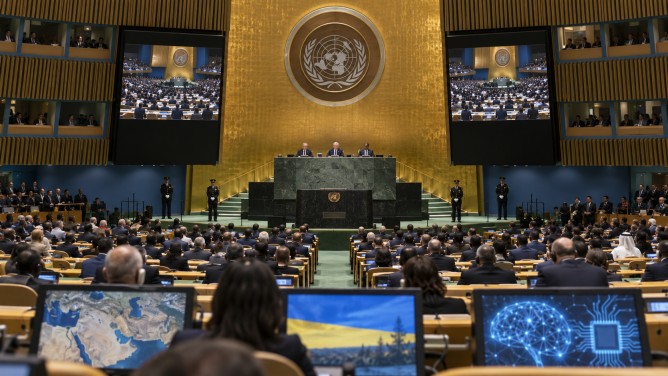
The gathering of world leaders at the 81st United Nations General Assembly in New York is poised to have significant consequences on international diplomacy, especially concerning conflicts in the Middle East and Ukraine, as well as the rapid advancement of artificial intelligence (AI). The outcomes of these discussions, set to unfold during the high-level debate from September 22 to 26 and on September 28, could reshape future international cooperation and affect global security and economic stability.
Key figures, including US President Donald Trump and Ukrainian President Volodymyr Zelenskyy, are expected to engage in crucial diplomatic meetings. Zelenskyy has confirmed a meeting with Trump during the UN session. These interactions come at a critical time as the war in Ukraine continues to impact civilians and global food and energy security. The ongoing conflict highlights the challenges the UN faces, particularly with Russia’s influential position as a permanent member of the Security Council, which complicates efforts to address the situation.
The Middle East remains a focal point, with regional security and energy supplies under threat due to the ongoing conflict involving Iran. Iranian President Masoud Pezeshkian’s attendance and Israeli Prime Minister Benjamin Netanyahu’s scheduled address underscore the importance of these discussions. Such engagements could influence international diplomacy and regional stability significantly.
Artificial intelligence also features prominently on the agenda, as its rapid development poses both opportunities and challenges. UN Secretary-General António Guterres has advocated for international cooperation and the establishment of common safeguards to manage AI technology responsibly. The UN’s previous establishment of an advisory body on AI governance reflects the organization’s commitment to navigating the complexities of technological advancements.
Financial constraints and the UN’s efficacy in responding to global crises are also under scrutiny. The United States recently contributed $725 million to meet its UN obligations, thereby maintaining its voting rights in the General Assembly. This financial commitment comes amidst calls for reforms and spending reductions, highlighting the ongoing debate over the UN’s role and effectiveness in addressing worldwide challenges.
As Guterres prepares to leave office at the end of 2026, these discussions take on added significance, with leadership transition considerations adding another layer to the negotiations. The outcomes of this year’s General Assembly could set the tone for future international efforts in addressing these pressing global issues.