
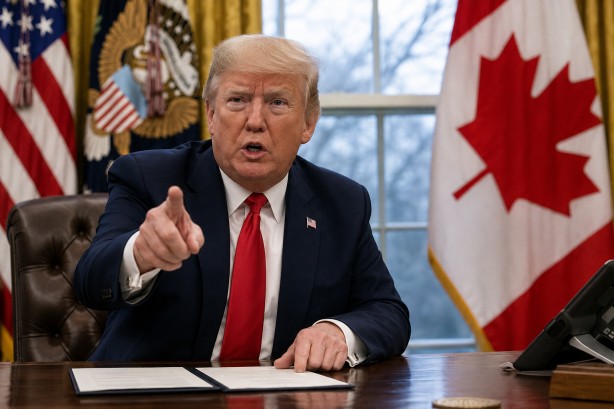
In a sharp escalation of tensions, US President Donald Trump has launched a critique against Canada following the collapse of trade negotiations between the two nations. This development has intensified the ongoing trade dispute, prompting the United States to slap 50% tariffs on approximately $20 billion worth of Canadian goods. The affected products span a wide range, heightening concerns of economic fallout.
Canadian Prime Minister Mark Carney has vowed to retaliate with equivalent tariffs, firmly stating that Canada will not yield to the demands set by Washington. Describing the situation as a trade war, Carney accused the United States of waging an economic assault on Canada. Meanwhile, US Trade Representative Jamieson Greer justified the tariffs as a necessary measure to safeguard American workers and secure supply chains.
The unfolding trade conflict has alarmed businesses and lawmakers on both sides of the border. Canadian business associations have cautioned that exporters and small enterprises could endure significant financial losses. Concurrently, US lawmakers, particularly those representing border states, have expressed concerns that the tariffs might lead to increased costs for businesses, farmers, and consumers, potentially affecting the broader economy.
Canada has announced that its planned retaliatory tariffs are slated to be implemented on September 8. These tariffs will target a range of products, including steel, dairy goods, appliances, and electronics, which could further strain economic relations between the two countries.
As this dispute escalates, uncertainty looms over the future of the US-Mexico-Canada trade agreement, which plays a critical role in governing a significant portion of trade across North America. The deteriorating trade relations between the US and Canada pose a potential threat to the stability and continuity of this pivotal agreement.