
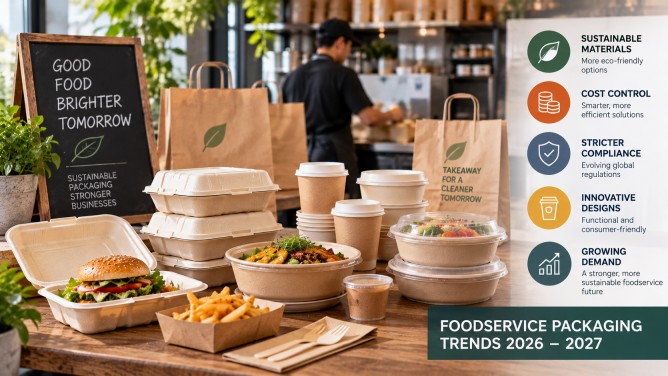
The foodservice packaging industry is evolving with an emphasis on performance, regulatory compliance, and application-specific solutions, particularly for the years 2026–2027. As sustainability gains traction, businesses in the restaurant, distribution, and food brand sectors are shifting their focus from merely replacing plastic to assessing overall performance, cost efficiency, and verified product claims. This trend is driven by the need to handle hot, greasy, and moisture-rich foods, which necessitate robust takeaway packaging. High-volume purchasers are increasingly considering total landed cost—factoring in freight, warehousing, and inventory expenses—over just the unit price.
One significant development is the movement towards factory-direct sourcing as a strategy for cost control. By working directly with packaging manufacturers, buyers can gain insights into production planning, tooling, and quality control, potentially reducing intermediary costs. This approach is beneficial for OEM/ODM programs that require customization, such as custom molds and branded packaging. In addition, the demand for verifiable compliance documentation is rising. With the introduction of Regulation (EU) 2025/40, which sets PFAS concentration limits in food-contact packaging from August 12, 2026, businesses, especially those serving European markets, are prompted to verify regulatory requirements and ensure documentation corresponds to the finished product.
As the industry moves away from a one-size-fits-all approach, there is a growing interest in application-specific barrier solutions. Standard molded bagasse proves suitable for various applications, but meals with high grease, moisture, or specific temperature demands may require additional protection. This has led to the exploration of PFAS-free barrier systems, water-based coatings, and laminated bagasse structures. For OEM buyers, these options allow for packaging tailored to specific food applications rather than choosing containers based solely on material.
Moreover, consistent supply and manufacturing capacity are becoming pivotal for restaurant chains, supermarkets, and packaging distributors. Grizzlies, for instance, operates 11 production bases with over 280 automated machines, boasting a monthly production capacity of up to 200 × 40HQ containers. This capability supports direct bagasse food packaging programs, offering both bulk and customized orders. Buyers are advised to evaluate factors such as production capacity, quality control, and lead-time capabilities when selecting suppliers. Testing packaging with actual menu items to determine container size, barrier level, and lid design is also encouraged.
As foodservice packaging continues to evolve, it is crucial for buyers to define their application needs, test product performance, compare total landed costs, verify compliance documentation, and evaluate manufacturing capabilities. By doing so, they can ensure that their packaging solutions meet performance expectations and regulatory standards while maintaining cost efficiency. Grizzlies, offering factory-direct bagasse food packaging options, provides a viable solution for businesses seeking reliable and compliant packaging solutions.
Legal Disclaimer:
The information contained in this article has been provided by independent third-party contributors, clients, or content partners. We do not independently verify the accuracy, completeness, legality, ownership, licensing, or reliability of submitted content, including text, images, videos, trademarks, or other media materials. The submitting party is solely responsible for ensuring that all content, including images and media assets, complies with applicable copyright, trademark, licensing, and intellectual property laws. We disclaim liability for any unauthorized use of copyrighted or proprietary materials by third parties. If you believe that any content published on this platform infringes your intellectual property rights, kindly contact the author above for prompt review and resolution.