
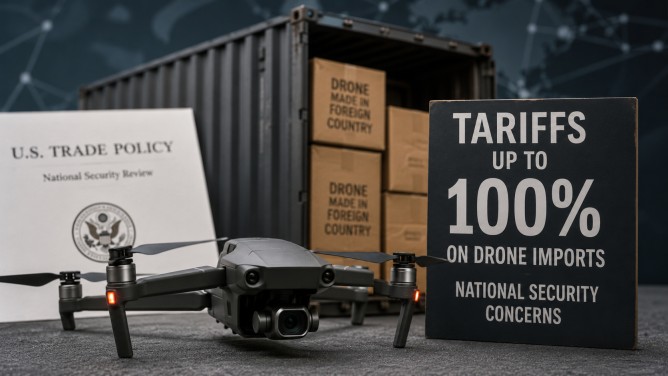
The United States is set to impose tariffs of up to 100% on certain drones and drone components, a move driven by national security concerns and a desire to lessen reliance on international supply chains, particularly those dominated by China. The new tariffs will affect unmanned aircraft systems, especially those over 25 kilograms and equipped with features like thermal cameras and docking stations. While these larger drones will face a 100% tariff, smaller drones will incur a 25% tariff. This policy aims to bolster the US defense and industrial sectors, stimulate domestic drone production, and create jobs, while curbing dependence on foreign suppliers.
The tariffs, scheduled to take effect on September 3, will also extend to drone imports from several critical trading partners. Drones and components from the European Union, Japan, Liechtenstein, South Korea, Switzerland, and Taiwan will be subject to a 15% tariff. Meanwhile, those from the United Kingdom will face a 10% tariff, provided the technology originates from these countries or the US. This broad approach highlights the US administration’s focus on enhancing national security by tightening control over drone technology and production chains.
China’s dominance in the global drone market is underscored by Shenzhen-based DJI, which holds a significant share of the US commercial drone sector. This has raised alarms in the US over potential national security threats, leading to prior restrictions. US officials have expressed concerns about foreign-produced drones being used for surveillance, data collection, and even potential attacks, prompting calls for increased domestic production to mitigate these risks.
This decision comes amid ongoing trade and technology tensions between the US and China, with both nations implementing measures impacting each other’s drone exports. The US Federal Communications Commission has previously advocated for greater domestic drone manufacturing to address security vulnerabilities. Meanwhile, in a reciprocal move, China has imposed restrictions on its drone exports to the US and has targeted several American companies as part of broader trade disputes.